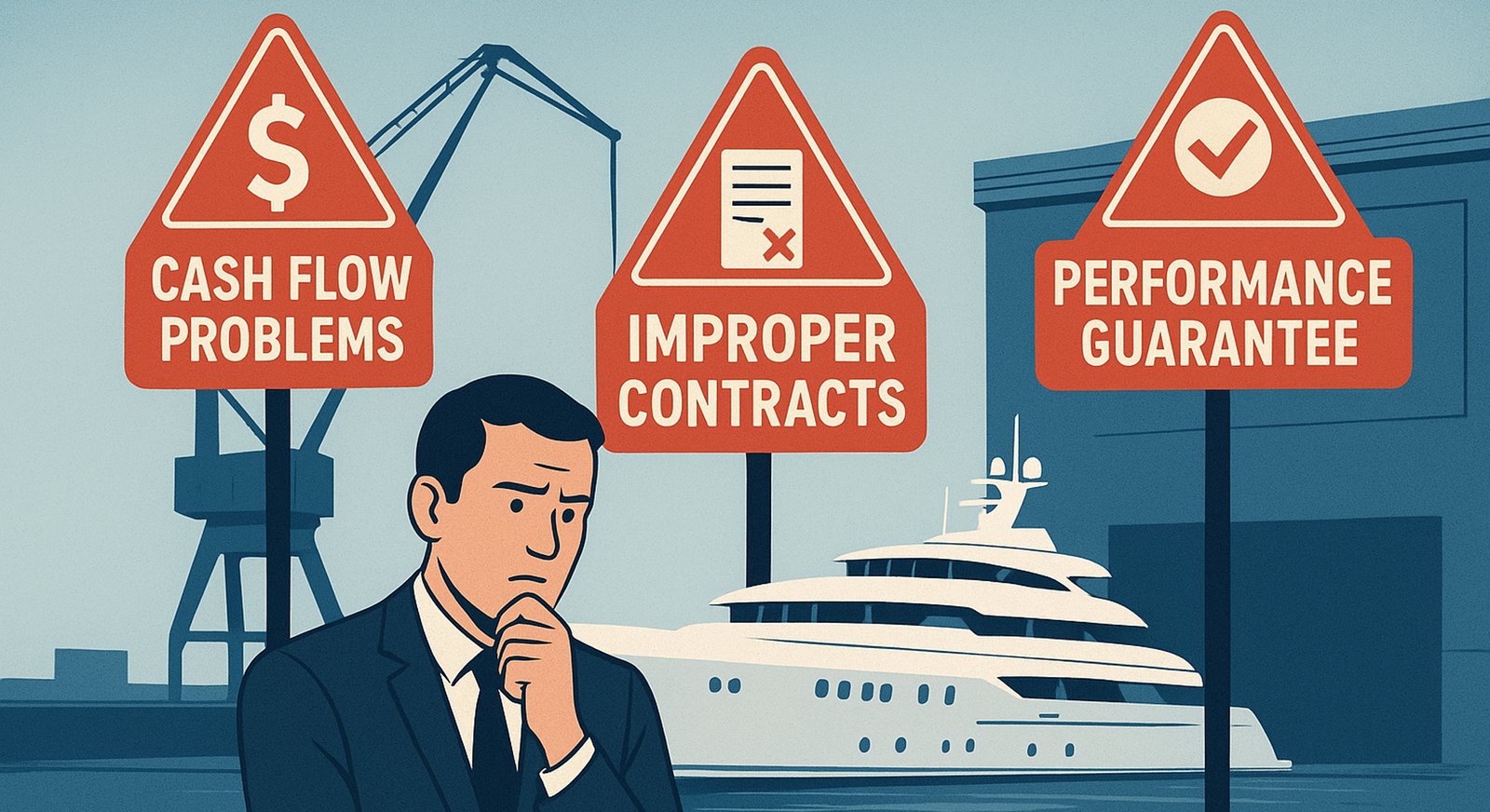
Building and buying a superyacht is a matter of the heart. However, contracts and cash flow determine who’s smiling when delivery dates arrive. In this episode of The Yacht Law Podcast, we zero in on yacht yard red flags that can derail even the best-laid plans. While outward appearances at some builders may seem impressive, your leverage lies in documents and timelines, not handshakes. You also need clarity on liens, and who truly controls the build—including when your yacht is actually considered a yacht under the law.
A quiet yard isn’t automatically a problem; a crowded yard often is, however. In fact, when too many yachts are mid-build, incoming payments might be financing the older projects. Effectively, your contract turns into a soft loan to the shipyard. What most buyers don’t realize is that they are unsecured creditors. Until your yacht is “in navigation”—a legal reference—you could be out of luck if financial troubles arise. There is, though, a way around this. Before signing a contract, take a sober look at the yard’s lenders and what the pledges are. Even strong yacht yards have succumbed to financial distress, so don’t skip diligence in favor of reputation.
Leverage comes from deadlines and documents. A firm delivery date paired with meaningful delay damages, for instance, can move mountains when schedules slip. Too often, “trust me” conversations are actually red flags. You’ll hear a real story in which a yacht buyer, in a critical situation, had to push for his yacht to launch and obtain title, just to ensure completion took place. Skilled maritime counsel was the only way the buyer avoided a bankruptcy preference nightmare—and a project potentially stuck, unfinished, for years.
On a related note, performance guarantees often separate action from theater if concern exists. A valid bank-backed guarantee can rescue a yacht project. In this case, the yacht yard provides assurance from its bank indicating it can guarantee delivery. Although some yacht yards balk at this because of the cost, Michael Moore, the lead attorney at Moore & Co. and our co-host, feels strongly that your unsecured millions are at stake. Even when the document comes from a reputable bank, though, have your lawyer inspect the language. Furthermore, have your lawyer ask questions of the guarantor to check the validity of the guarantee. Evasions or outright typos are big red flags, not trivia—as you’ll hear in one eye-opening yet also humorous war story.
Finally, be wary if yacht yards require non-refundable deposits before you sign a contract. Effectively, you’re draining your leverage before negotiations ever begin. You can still negotiate in good faith with a letter of intent (LOIs), and a tightly scoped one at that. Tightly scoped LOIs can even use references to other yachts—“in the style of,” for example—in their wording.
Ultimately, while your heart can choose the yacht, your head needs to choose protection. Listen to the podcast episode above, or listen and subscribe for free on Apple Podcasts, Spotify, Amazon Music, or your favorite service. Use the link below.
The Yacht Law Podcast theyachtlawpodcast.buzzsprout.com