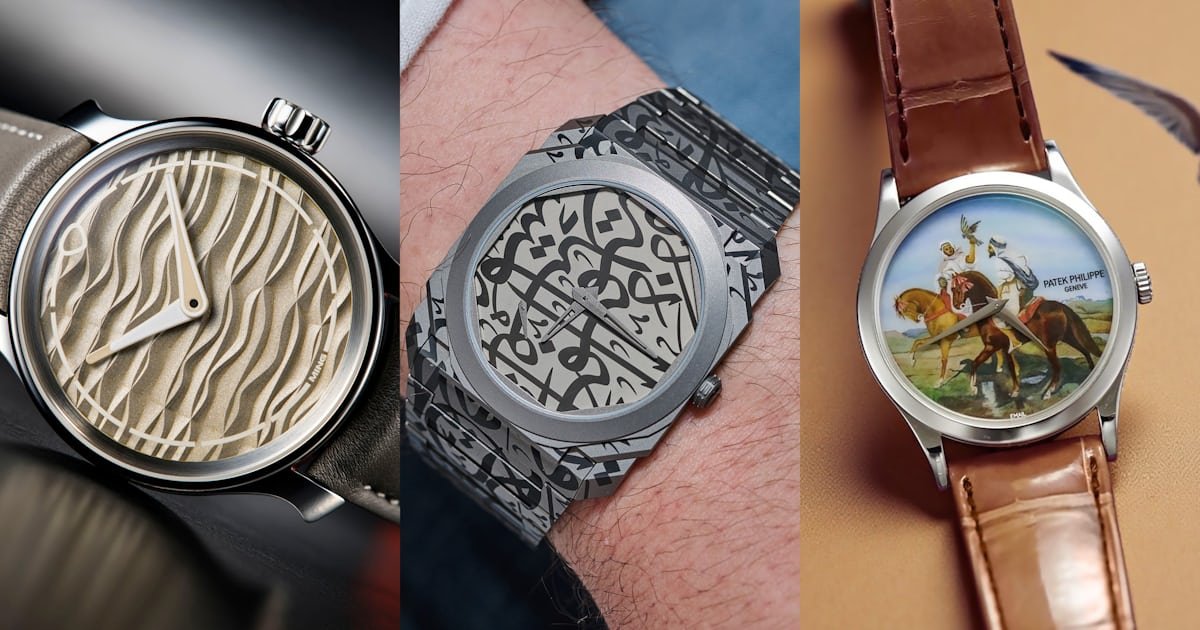

The Middle East has a rich culture and history of horological enthusiasm. Dubai Watch Week is proof enough, with a massive 49,000 people attending this year from across the region and the world. But thanks in part to people like the late Omani leader Sultan Qaboos bin Said Al Said, alongside Dubai’s Sheikh Mohammed bin Rashid Al Maktoum and others, brands have created some of the most collectible watches in the world—especially vintage ones. Beyond the cool factor of a watch featuring two crossed swords behind a Khanjar dagger and under a crown (the royal emblem of Oman), or the eagle emblem with a dhow in the center (the national symbol of the UAE until 2008), the story behind many of these watches, including their creation and provenance, is fascinating.
What actually made them most interesting is their stories. These were most often watches made for royalty or governments, gifted to friends, government employees, military officials, and even foreign military personnel who helped foreign leaders attain their positions of power. They were seldom commercial products in this era. Modern Middle East-focused watches, however, have increasingly incorporated the region’s Eastern Arabic numerals on their dials as a commercial decision. While it was once interesting (due to its original rarity), the proliferation and, maybe even more than that, lack of creativity in the font have made the treatment wear thin in my eyes.