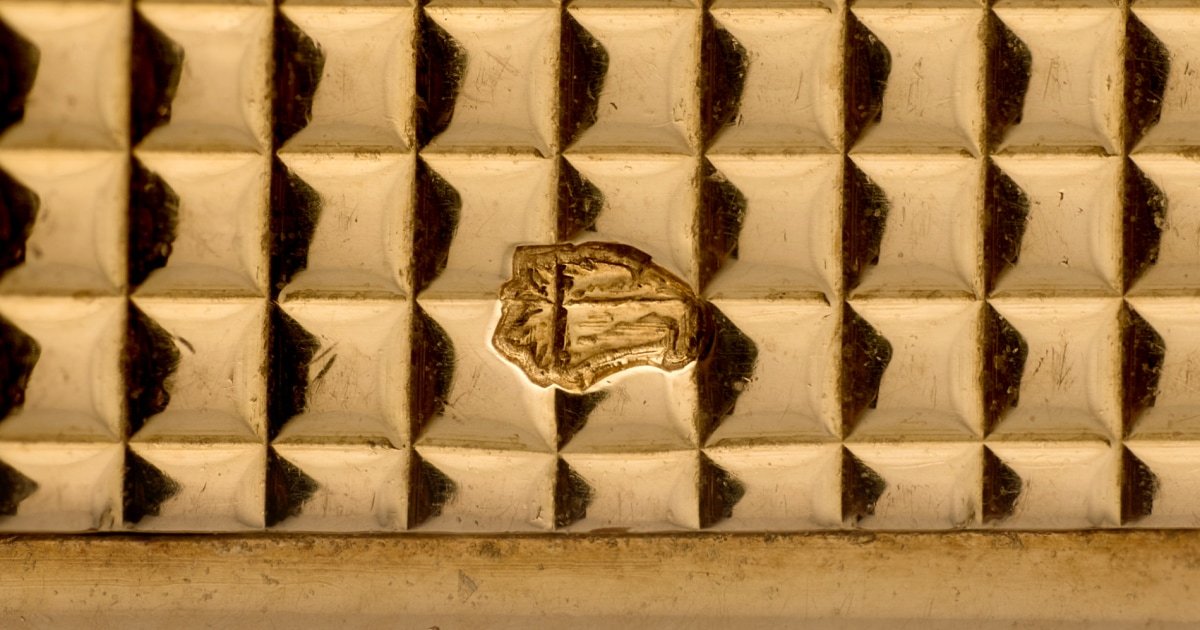
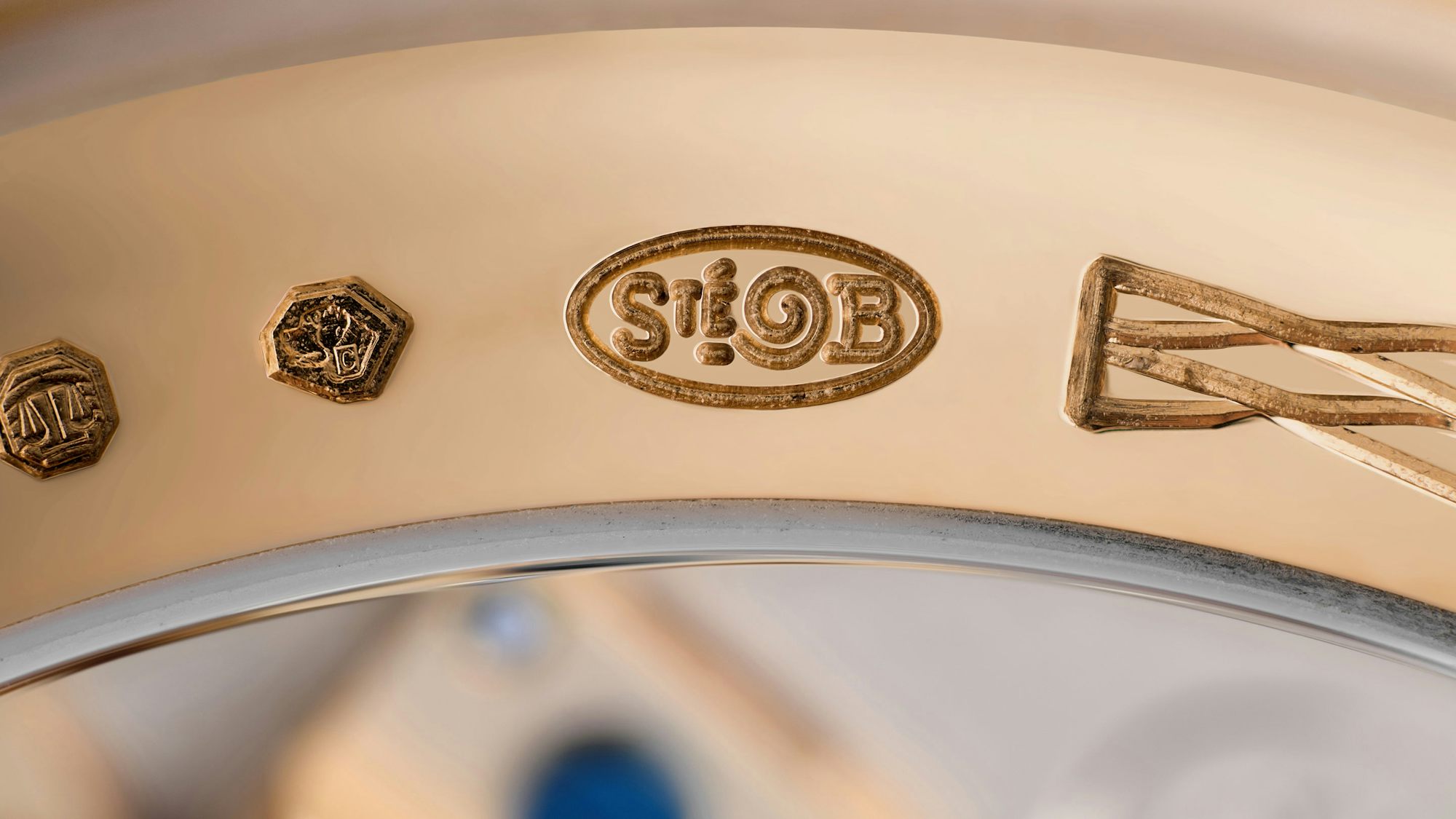
Various federal laws in multiple countries (most dating to the 19th century), require hallmarks on precious metal watch cases as an attestation of quality control. For vintage watches, authenticity and metal purity must be double-checked in other ways to be certain. So why would a legally mandated identifier matter to collectors?
There are no dial features or movement finishes quite as charming as a crisp hallmark. Crisp is the operative word; safe from dreaded over-polishing, hallmarks act as indications of condition. Sharp edges are keenly observed by collectors in search of that ever-important and elusive descriptor: unpolished.
When viewed through a loupe, hallmarks come alive: Tiny animals, allegories, and alphanumerical ciphers tell stories of where, when, and to whom a watch was born. No mark is more familiar than the Helvetia head — struck into Swiss gold cases of at least 18 karats from 1881 to 1995. Helvetia is the personification of Switzerland, and, in full depictions, she holds a large shield emblazoned with the Swiss cross. The hallmark is a limited profile view of her head with braided hair and a wreath (representing confederation), and it is finished with a single character representing the bureaux de contrôle assay office where the case was tested: G for Geneva, L for Le Locle, N for Neuchâtel, a * for Basel, etc.